The most valuable things an organization knows are said out loud once and written down badly. Lumera listens to the meeting, reads the document, and returns both as something you can search, cite, and present.
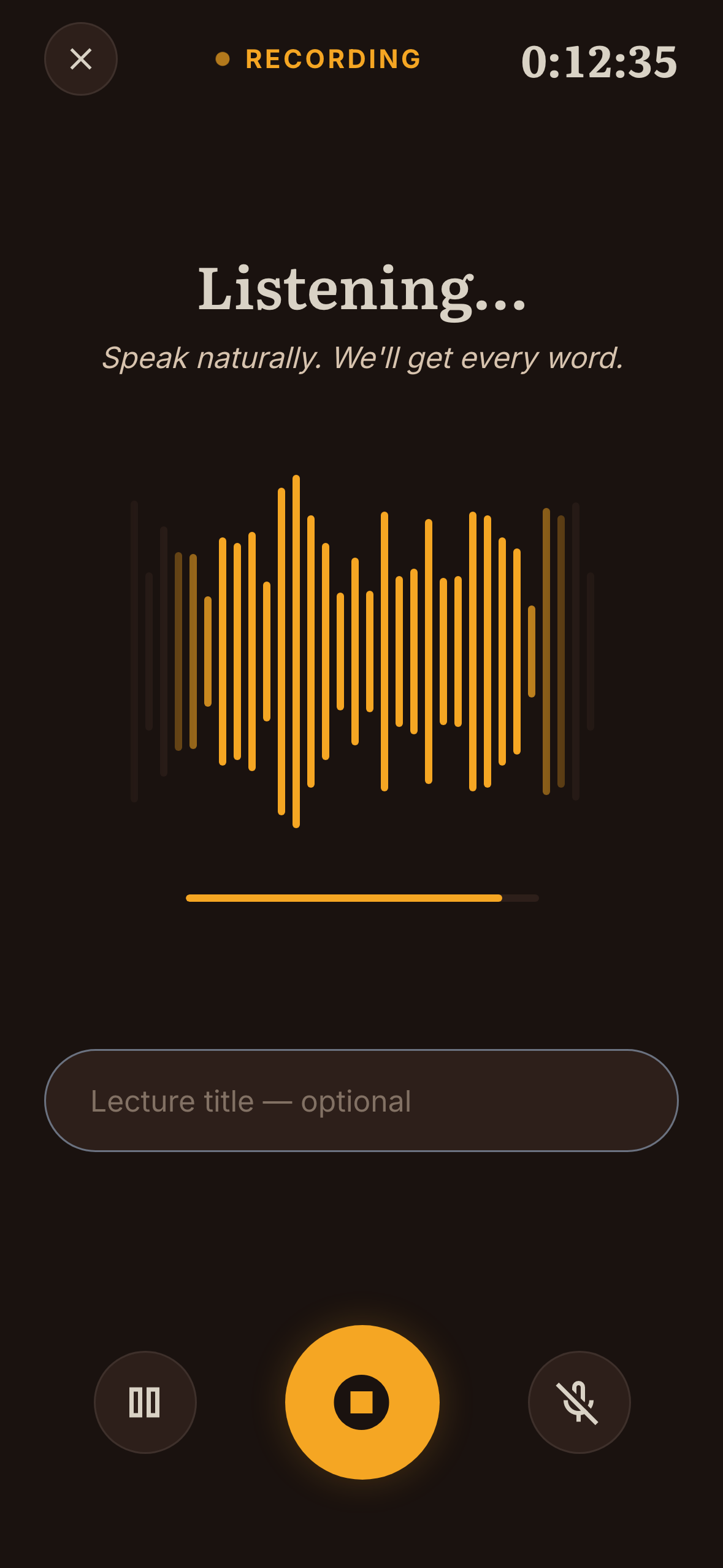
Request early accessPress record and put the phone down. Lumera captures the room, separates each speaker, and produces a verbatim transcript with the minutes already drawn out of it — decisions, owners, and what was actually agreed.
Nothing depends on whoever volunteered to take notes. The record is complete, attributed, and timestamped to the second it was said.
Lectures, interviews, board sessions, site visits. If it was spoken, it becomes a document.
Photograph a contract, a whiteboard, a printed report. Lumera finds the page edges, corrects the perspective, and reads it — then keeps going, because recognizing the words is the easy part.
Tables come out as tables: rows, columns, and figures you can sort and export, not a picture of a grid. Images are preserved at full fidelity and rendered alongside the text they belong to.
Every result carries a confidence score, so you always know what the system was certain of and what deserves a second look.
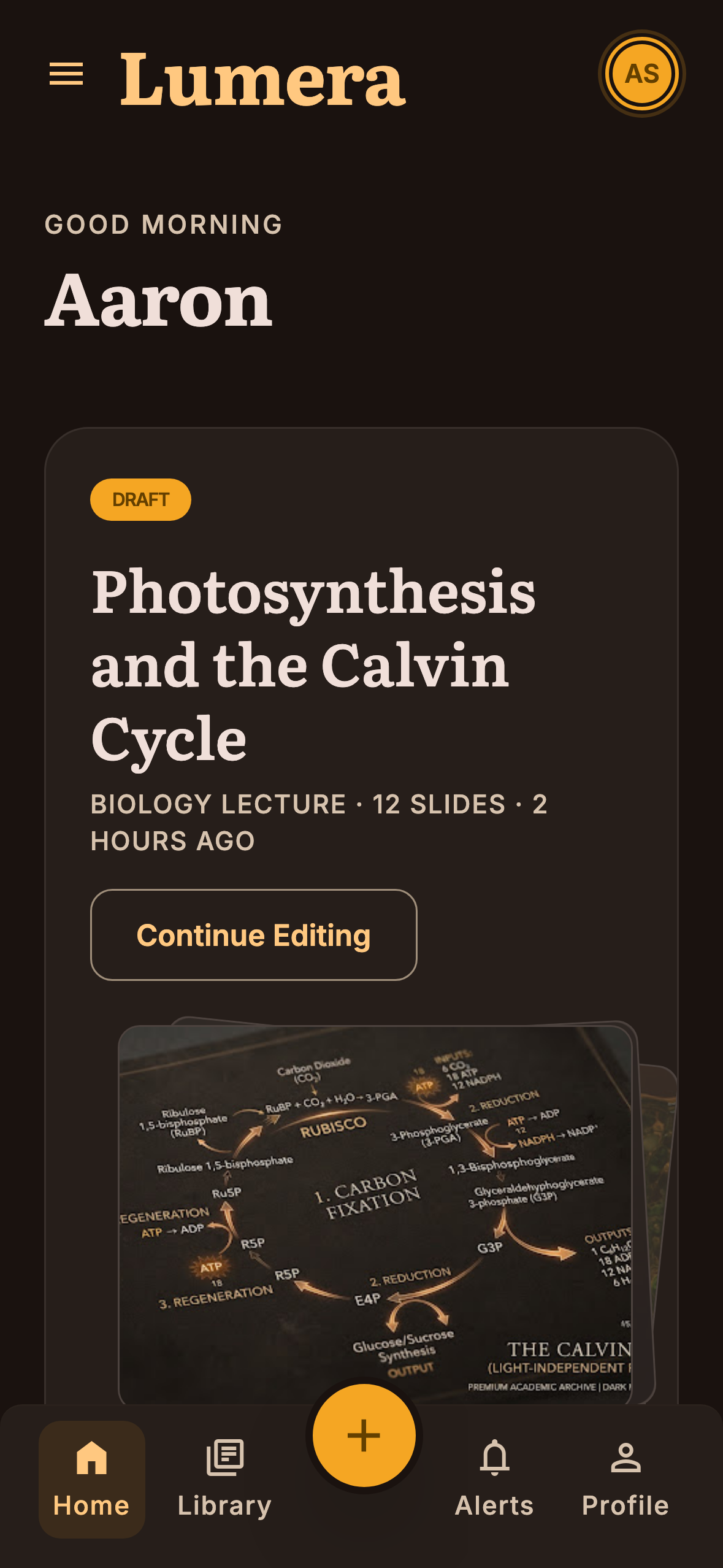
The recap everyone needs after a meeting is made of things that were already said. Lumera builds it — a structured deck drawn from the transcript, the documents, or both, with the argument already in order.
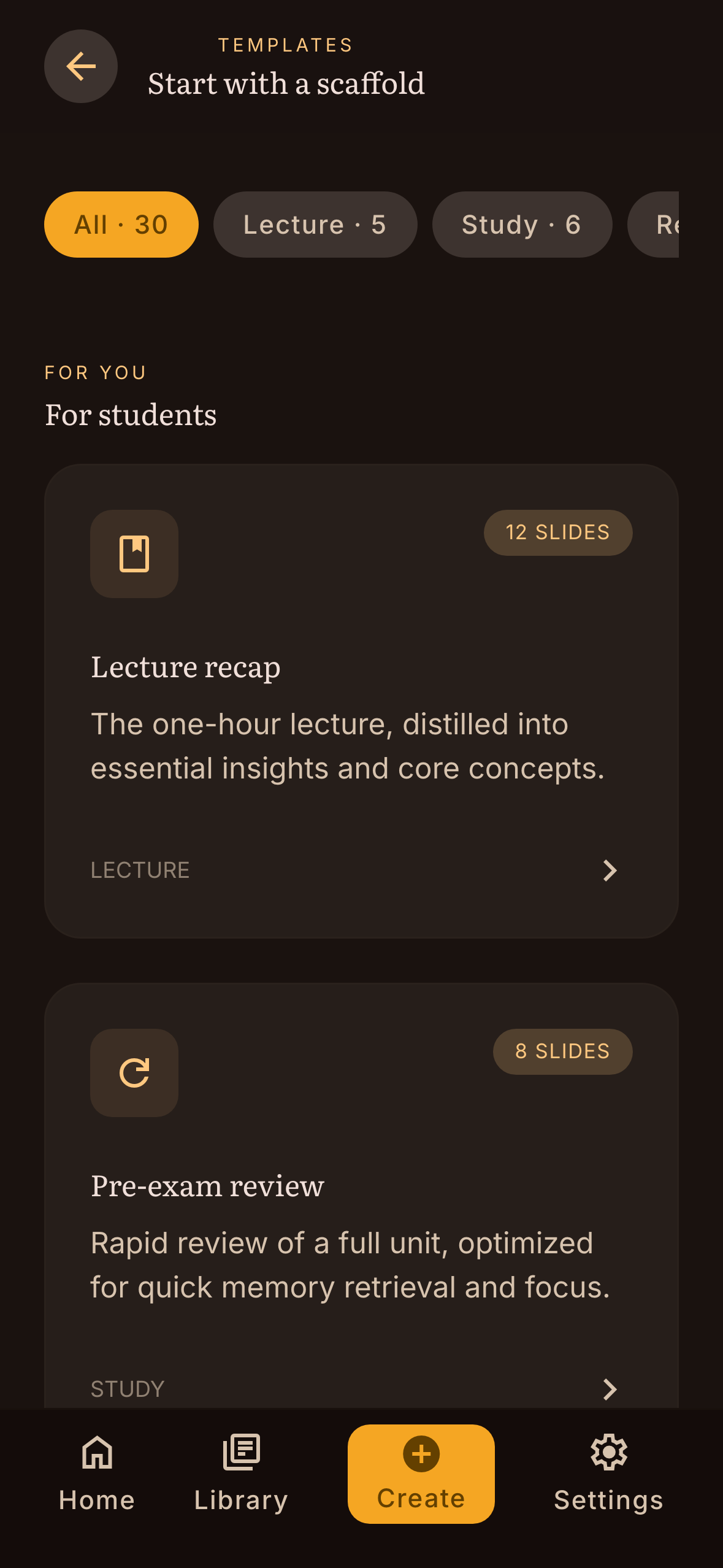
Start from a scaffold built for the occasion: a lecture recap, a pre-read, a quarterly review. Then edit it like any deck you have ever used, and export to PowerPoint or PDF when it is ready to leave.
What used to be an evening of assembling slides is the last two minutes of the meeting.
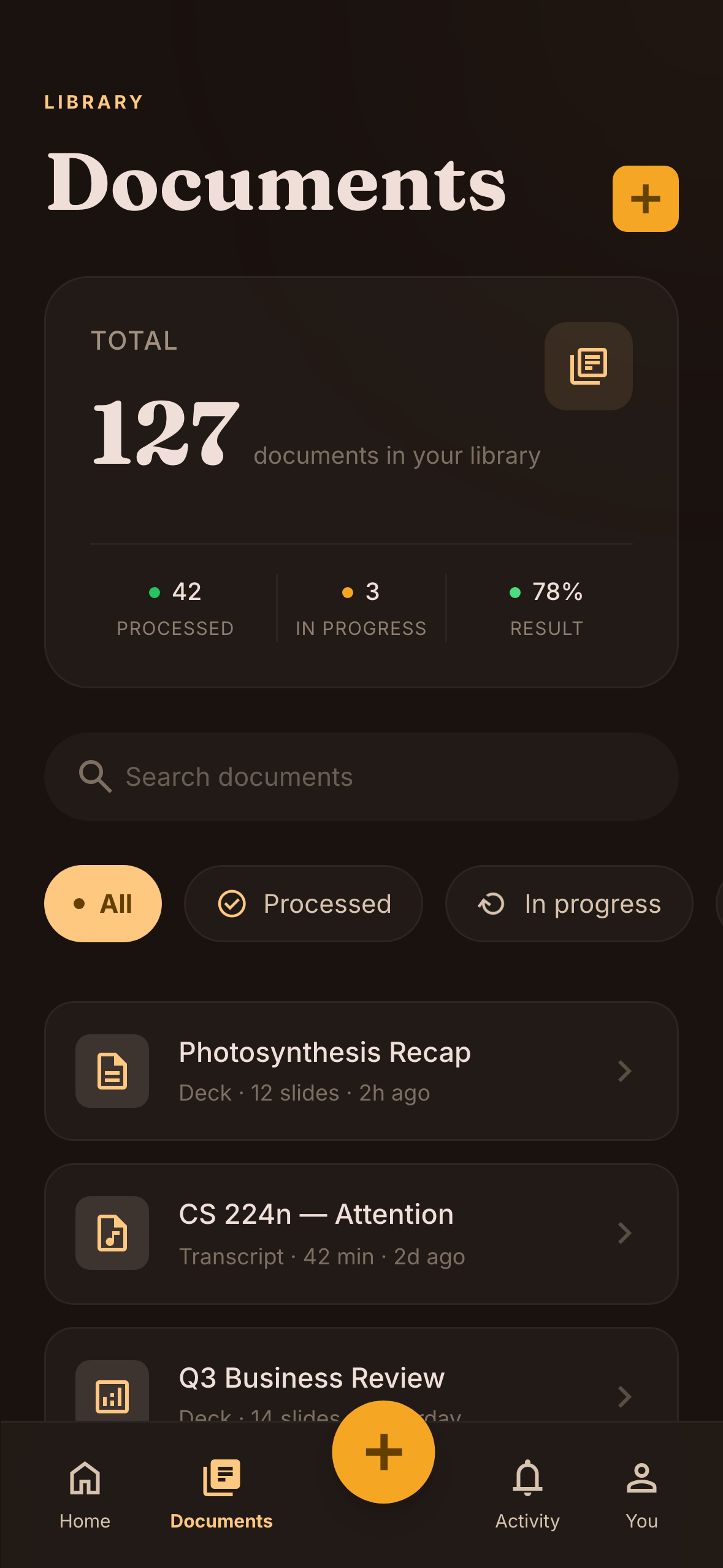
Recordings, transcripts, scans, tables, and decks land in a single library — searchable by what they say, not merely by what they were named the day someone saved them.
Workspaces keep a department's material separate from a client's. Everything is exportable, in open formats, at any time.
The archive is the product. Every meeting you hold and every document you scan makes it more useful than it was the week before.
Every line in a transcript points back to a speaker and a timestamp; every extracted figure points back to the page it came from. Nothing is asserted without a source.
Recognition results carry their confidence openly, including where it is low. A system that hides its uncertainty cannot be checked, and one that cannot be checked should not be trusted.
Workspaces are isolated, exports are in open formats, and the archive can be taken elsewhere in full. Nothing depends on remaining a customer.
Audio, documents, images, and tables belong to one another. Lumera treats them as a single record rather than four disconnected tools stitched together.
Lumera is in active development at the Akarmis workshop. Early access opens with a small group whose meetings and archives will shape the final product.
Join the early-access list